
Why Busy Professionals Are Turning to Paint by Numbers
Modern professionals face a unique mental challenge: our brains never truly switch off. Between back-to-back video calls, constant notifications, and the pressure to make hundreds of micro-decisions daily, your stress hormone levels stay elevated long after you close your laptop. This chronic activation leads to what researchers call decision fatigue, where your mental resources become depleted, making even simple choices feel overwhelming.
That’s precisely why creative projects have become an unexpected solution for the overworked. Paint by numbers offers something radical in our chaotic world: a structured creative outlet that requires zero planning or artistic skill. You’re not adding another item to your endless task list or learning a complicated new hobby.
Here’s what makes it effective for busy minds:
- Clear visual progress – Unlike abstract work projects, you can actually see your accomplishment growing
- Screen-free engagement – Your eyes and brain get a genuine break from digital stimulation
- Pre-determined choices – No decisions needed, just focus on the simple act of applying colour
- Achievable 30-minute sessions – Fits into realistic evening windows without requiring marathon time blocks
The beauty lies in its predictability. Your overwhelmed brain craves activities with clear endpoints and visible results, something that feels increasingly rare in modern professional adult life.
Everything You Need to Start Your Evening Ritual
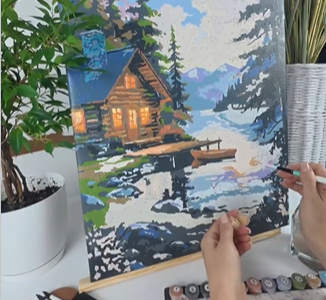
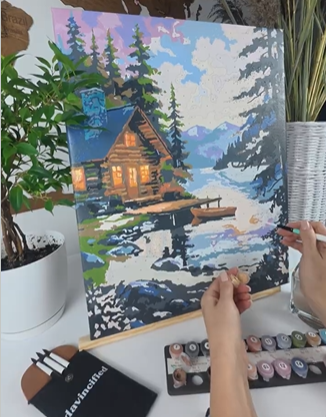
Getting started with your evening paint ritual requires surprisingly few items, but choosing the right ones makes all the difference. At minimum, you’ll need a paint by numbers canvas with a clear numbering system (stick with beginner designs if you’re new), pre-mixed paints in numbered containers, and a quality brush set that includes both fine-tip brushes for tiny areas and broader ones for filling larger spaces. Quality kits from brands like Davincified include all essential supplies in one package, with premium brushes and paint formulations designed specifically for stress-free painting.
Beyond the basics, set yourself up for success with a water cup for rinsing and, critically, keep a damp cloth within arm’s reach and wipe your brush between every colour change, even similar shades. This prevents muddy color contamination that can ruin the crisp, defined look that makes paint by numbers so satisfying for perfectionist personalities.
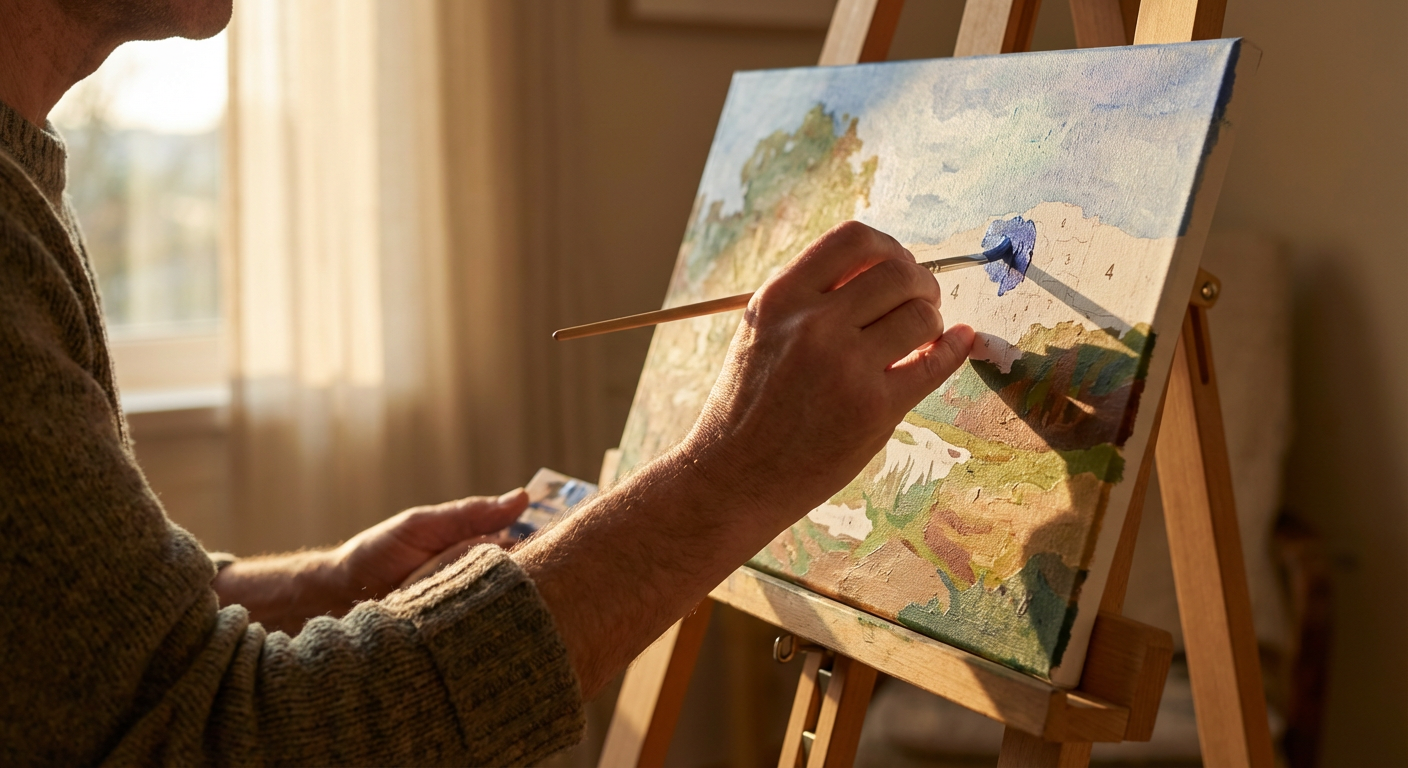
Don’t overlook your lighting setup. A simple desk lamp positioned to avoid glare, or painting near a window during golden hour, helps you distinguish those tricky numbered sections. Consider propping your canvas on an easel or clipboard at a comfortable angle to reduce neck strain. The beauty of this hobby? You only need 30 minutes per evening to make meaningful progress.
The 30-Minute Evening Protocol That Rewires Your Brain
Here’s the thing about building a sustainable creative practice: your environment shapes your behaviour more than willpower ever will. Choose one spot in your home that becomes your painting corner. It doesn’t need to be fancy – a cleared kitchen table works perfectly. The magic happens when your brain starts associating that specific location with creative focus.
Before you touch a brush, create a five-minute transition ritual. This might be making tea, doing three deep breaths, or simply closing your work laptop and leaving it in another room. You’re signaling to your nervous system that it’s time to switch gears.
Now for the actual painting protocol:
- Minutes 0-10: Start with larger, obvious sections. No decisions required, just pleasant repetition
- Minutes 10-20: Move to slightly more detailed areas as you settle into flow
- Minutes 20-30: Finish wherever feels natural, even mid-section
Stop at 30 minutes, even if you want to continue. This scarcity creates genuine excitement for tomorrow’s session instead of another obligation on your endless to-do list.
Paint by numbers activates your visual cortex and fine motor control while quieting the verbal, analytical regions that dominate your workday. You’re literally giving overworked brain pathways a rest while strengthening underused ones.
Pro Techniques for Perfectionist Personalities
For perfectionists, strategic painting order makes all the difference in maintaining that pristine finish. Start painting from the top of the canvas and work your way down to avoid accidentally smudging completed sections with your hand or arm. This simple directional approach saves hours of touch-up work and keeps your masterpiece pristine throughout the process.
The debate between colour-blocking (finishing all sections of one colour) versus area-by-area painting comes down to personal preference. Colour-blocking creates momentum and lets you perfect your technique with each shade, while area-based work shows progress faster. Try both methods to discover what satisfies your perfectionist tendencies most.
When mistakes happen (and they will), remember that paint by numbers is remarkably forgiving. A slightly wobbly line disappears once surrounding sections are filled. Davincified’s canvases ship in protective tubes to ensure they arrive completely flat and damage-free, which is crucial for achieving those clean edges that perfectionist painters love.
Brush care matters immensely for consistent results. Rinse your brush thoroughly between colors and reshape the bristles with your fingers. For edge precision, use a light touch and let the brush tip do the work rather than pressing down hard.
Within your 30-minute session, take micro-breaks every 10 minutes. Shake out your hands, stretch your fingers, and give your eyes a rest. These brief pauses prevent fatigue without disrupting your flow state.
Making It Stick: From Evening Experiment to Burnout Prevention
The real magic happens when you start noticing patterns. After two weeks, check how quickly you’re falling asleep and whether your mind races less at bedtime. Keep a simple note on your phone tracking these shifts, nothing fancy required.
Protecting your half-hour block means treating it like any important appointment. Tell your family this time isn’t negotiable, turn your phone to silent, and resist the urge to squeeze in “just one quick thing” beforehand. When you finish a canvas, hang it somewhere visible. That completed piece becomes proof you can follow through on something meaningful.
Choosing what comes next should feel light, not stressful. Consider curating a collection of varied difficulty levels from sources like Davincified so you can match canvas complexity to your current energy levels – easier designs for depleted evenings, more detailed pieces when you’re feeling engaged.
Here’s what happens over time:
- Week 1-2: You establish the routine and start relaxing into the process
- Week 3-4: Sleep patterns improve and evening anxiety drops noticeably
- Week 5+: You’ve rebuilt genuine creative confidence and resilience
Should you ever paint longer? Sure, if you genuinely want to and aren’t trying to ‘maximise productivity.’ The moment it becomes another checkbox exercise, scale back. This practice works precisely because it stays contained and pressure-free.
This is a collaborative post.
 12 Days in Rajasthan: colour, craft and new friendships

Leave a Reply