
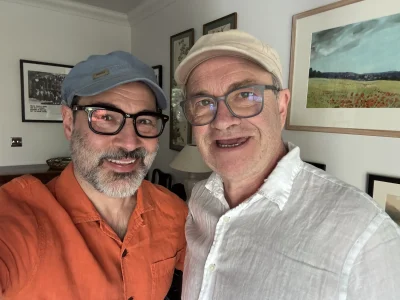
Listening to Adam Buxton’s recent podcast had us chatting about hair loss and hair transplants.
Two quotes for the same head of hair can differ by a factor of four, and the reason is rarely quality alone. Pricing in surgical hair restoration is assembled from several moving parts: how many grafts someone says you need, who physically does the work, how long a theatre is occupied, and what happens in the twelve months afterwards. A written quote from a Dublin hair transplant clinic and a package price advertised by an operator abroad can look like directly comparable numbers on a screen while describing quite different pieces of work. Prising the figure apart is the only way to know which is which.
Per graft pricing and what it obscures
The commonest structure across Ireland and the UK is a price per graft. It sounds transparent. Multiply the rate by the number of follicular units and you have your total. The weakness is that the graft count is set by the same organisation quoting the rate, and a low rate multiplied by a generous count produces a perfectly healthy invoice.
Broad indicative rates in this region tend to sit somewhere around two to five euro or pounds per graft, though this shifts constantly and varies with the surgeon, the technique and the complexity of the case. At that spread, a 2,000 graft procedure might be quoted anywhere from roughly 5,000 to 10,000 euro in Ireland, with sterling figures in the UK running along broadly similar lines. Treat numbers of that sort as rough orientation, not a quotation. The only price that means anything is one written down after an in person assessment of your donor area.
Fixed session pricing and its blind spot
The alternative is a flat fee for a session, sometimes described as a half day or full day of surgery. This removes the incentive to inflate graft numbers, which is a genuine advantage. The blind spot is the opposite one: if the price is fixed regardless of output, there is nothing structurally encouraging the team to place the last few hundred grafts with the same care as the first few hundred, and a session that ends early still costs the same.
Neither model is inherently more honest. What matters is whether the quote states a specific graft number, or a specific range with a stated minimum, alongside the fee. A fixed session price with no graft figure attached is not a comparable quantity.
Why very cheap per graft rates often mean bigger sessions
A recognised pattern in the sector is that the lowest advertised rates accompany the largest recommended sessions. A patient with early recession who might reasonably be treated with 1,800 grafts is quoted 4,000, and the low unit rate makes the total look reasonable. The cost of this is not only financial. Donor supply is finite, and follicles taken now cannot be taken again later. Overharvesting to fill a large session can leave the back of the head visibly thinned and reduce what is available for the second procedure that many patients eventually want.
A quote that recommends fewer grafts at a higher rate is not automatically the more expensive option once the donor area is treated as an asset with a lifetime budget.
What the fee is supposed to cover
Ask for an itemised breakdown and the components become easier to weigh:
- Surgeon time, including planning the hairline, making recipient incisions and supervising the day
- The technician team, who typically carry out much of the extraction and placement
- Theatre time, sterile consumables, punches, blades, storage solution and anaesthetic
- Post-operative medication, washing kit and the follow-up appointments at intervals such as one week, three months, six months and twelve months
Where quotes diverge sharply, it is often here. Some prices include a full programme of reviews with photography at each stage; others include a single check the following morning and nothing more. Platelet rich plasma is a common add-on, sometimes bundled, sometimes charged separately at a few hundred euro or pounds per session, and evidence for it as an adjunct is mixed rather than settled. Any prescribed medication such as finasteride or minoxidil is usually an ongoing cost carried by the patient and should be counted into the real total.
The procedure you may need in five years
Male pattern loss is progressive. A transplant moves hair; it does not switch off the process affecting the hair around it. Patients treated in their late twenties or thirties frequently return years later, either to thicken the original area as native hair recedes behind it or to address a new zone. Whether that second operation is needed depends on genetics, age at first surgery and whether medical treatment is used to hold existing hair.
Budgeting on the assumption of one lifetime procedure is optimistic for a substantial minority of patients. Asking a surgeon directly what a likely second session would involve, and roughly what it might cost at today’s prices, tends to produce a more realistic picture than the headline figure alone.
Overseas packages and the costs outside the invoice
Package prices abroad can be a fraction of domestic quotes, often advertised in the region of 1,500 to 3,000 euro for large graft numbers, again as a loose indication only. The advertised figure usually covers surgery, hotel and airport transfers. It does not cover flights for one or two people, meals, time off work of a week or more, or a return trip if something needs reviewing.
The larger uncertainty is revision. If growth is patchy, the hairline is placed too low or the donor area is depleted, corrective work is difficult, is generally more expensive than primary surgery and will usually be carried out closer to home. Follow-up conducted by message from another country is not equivalent to being seen in a clinic. None of this makes travelling abroad indefensible, but the honest comparison includes the tail of costs that only some patients incur.
Finance plans repay close reading
Interest free credit over twelve months is a genuinely different product from a longer plan at a double digit annual rate, where the total repayable can exceed the cash price by a meaningful margin. Check who the lender is, what the total amount repayable is rather than only the monthly figure, and what happens if you cancel before surgery or the procedure is postponed. Deposits are sometimes non-refundable.
When you set two quotes side by side, make them describe the same thing: the same graft count, the same follow-up schedule, the same inclusions, the same aftercare. Results vary between patients and nothing can be guaranteed, but a like for like comparison at least tells you what you are buying.
This is a collaborative post.
Listen to Adam Buxton and Harry Enfield talking hair transplants here.
 Wandering London: slow walks, love stories, and the paths that bring us together

Leave a Reply