
There is something timeless and undeniably beautiful about dehydrated orange slices used as decoration. Whether draped across a holiday wreath, threaded into a garland, floated in a seasonal cocktail, or nestled among pine cones in a centerpiece, these dried citrus rounds carry a warmth and natural elegance that few other decorative elements can match.
The good news is that making them at home is far more accessible than most people realize — a toaster oven, a sharp knife, and a little patience are genuinely all you need to create stunning dried citrus decorations that look professionally crafted. Understanding how to make them well, and how to use them creatively, opens up a world of decorative possibilities across every season of the year.
Why Dehydrated Orange Slices Have Stood the Test of Time
Long before mass-produced decorations filled store shelves, people turned to nature for their festive adornments. Dried fruits, herbs, spices, and botanicals were staples of seasonal decoration in homes across cultures and centuries. Dehydrated citrus, particularly oranges, has been a beloved part of this tradition for generations, and its appeal has never really faded.
There’s a sensory richness to dried orange slices that synthetic decorations simply cannot replicate. They carry a subtle, lingering fragrance. Their translucent amber and deep tangerine hues glow warmly in natural light. Their circular shape carries a natural symmetry that is visually pleasing in almost any arrangement. And because they are entirely natural, they age gracefully and can be composted at the end of their decorative life rather than contributing to landfill waste.
In an era where people are increasingly drawn toward sustainable, natural, and handcrafted approaches to home decoration, dried citrus has experienced a genuine renaissance.
What Makes a Great Dehydrated Orange Slice
Before getting into uses and applications, it’s worth understanding what separates a beautifully dried orange slice from one that disappoints. The quality of the finished product depends on a few key factors:
Slice thickness: uniformity matters enormously. Slices that are too thick will take much longer to dry and may not dehydrate fully in the center, leading to mold over time. Slices that are too thin become brittle and fragile. A consistent thickness of approximately four to six millimeters tends to produce the best results, thin enough to dry thoroughly, sturdy enough to handle and arrange.
Orange variety: Navel oranges are the most commonly used for decorative drying because of their rich color and relatively low seed content. Blood oranges produce stunning deep red and burgundy tones that are particularly striking in arrangements. Clementines and mandarins create smaller, daintier rounds ideal for more delicate decorative applications.
Drying method: The method used to dehydrate the slices has a direct impact on color retention, texture, and overall appearance. Slow, low-temperature drying preserves the vibrant orange pigment and maintains the translucent quality that makes these slices so visually appealing when held up to light.
How to Dehydrate Orange Slices at Home
The process itself is wonderfully simple, which is part of what makes homemade dried citrus decorations so satisfying to create.
Using an Oven or Toaster Oven
An oven or countertop toaster oven is one of the most accessible and reliable methods for drying orange slices at home. The key is low, consistent heat over an extended period. Temperatures between 93°C and 120°C (200°F to 250°F) work well. Higher temperatures will cook the slices rather than dehydrate them, causing them to brown prematurely and lose that characteristic translucent beauty.
Line your baking trays with parchment paper and arrange the slices in a single layer without overlapping. Place them in the oven and allow them to dry slowly for two to four hours, flipping them every 30 to 45 minutes to ensure even moisture removal from both sides. The slices are ready when they feel dry and slightly leathery to the touch, with no remaining moisture in the pulp.
Allow them to cool completely on a wire rack before using or storing them. Cooling is an important step — slices that are packaged or arranged while still warm can develop condensation, which reintroduces moisture and shortens their lifespan.
Using a Food Dehydrator
A dedicated food dehydrator offers excellent results and requires less active monitoring. Set the temperature to around 57°C (135°F) and allow the slices to dry for six to eight hours. The longer, lower-heat process tends to preserve color particularly well.
Air Drying
For those who prefer a completely hands-off approach, orange slices can be air dried by threading them onto string and hanging them in a warm, well-ventilated space. This method takes several days and is more dependent on ambient conditions, but it produces beautiful results and is the most energy-efficient option.
Creative Ways to Use Dried Orange Slices for Decoration
This is where the real joy of dehydrated citrus begins. The versatility of dried orange rounds as a decorative element is genuinely remarkable.
Wreaths and Garlands
Dried orange slices are a natural fit for wreaths, adding color, texture, and fragrance to traditional evergreen or twig-based designs. They can be wired directly onto wreath frames or hot-glued into positions among other natural elements like cinnamon sticks, dried rosemary sprigs, star anise, and pine cones.
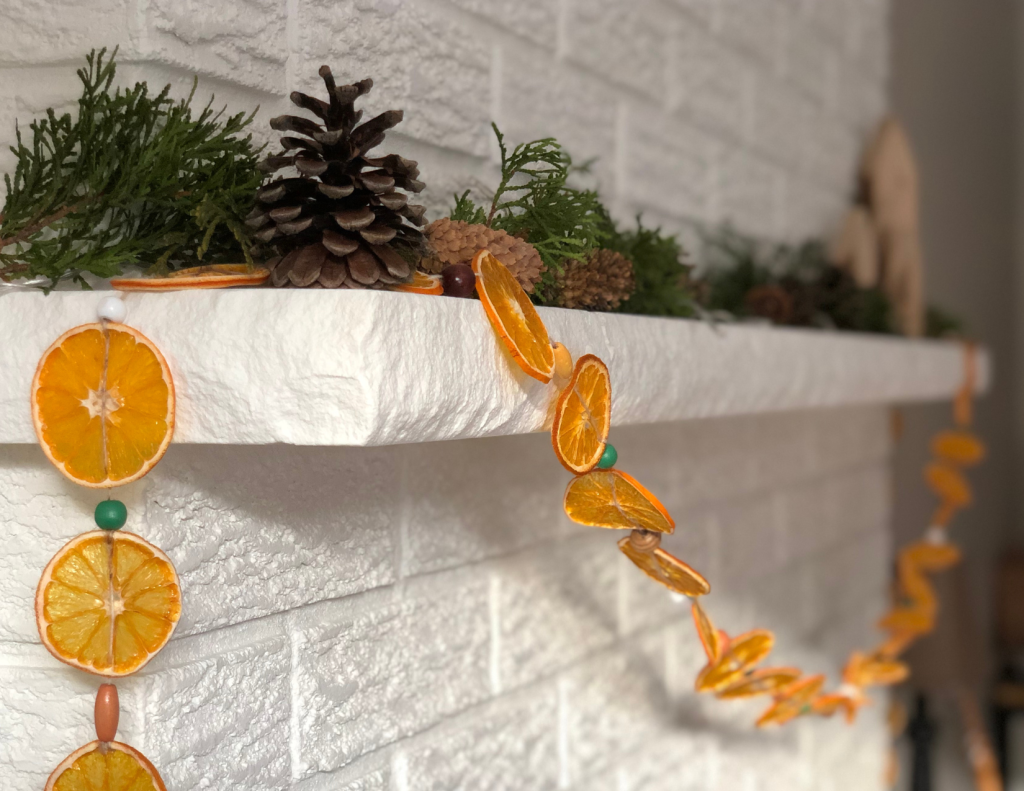
Garlands made from alternating dried citrus rounds, cranberries, and greenery create stunning mantelpiece or staircase decorations during the winter holiday season. Threaded on twine or jute cord, they have a handcrafted, artisan quality that store-bought decorations rarely match.
Centerpieces and Table Arrangements
Scattered among pillar candles, layered into glass vases or lanterns, or arranged on wooden boards with fresh herbs and seasonal foliage, dried orange slices elevate any table setting. They work equally well for casual everyday arrangements and formal dinner party centerpieces.
Gift Wrapping and Tags
Attaching a dried orange slice to wrapped gifts with a sprig of rosemary or a cinnamon stick transforms simple packaging into something genuinely special. It’s a thoughtful, personal touch that people notice and appreciate far more than a standard bow or ribbon.
Seasonal Cocktails and Mocktails
While decorative in intent, dried orange slices are also entirely food-safe and can be used to garnish drinks. They make elegant additions to mulled wine, seasonal cocktails, hot teas, and festive punches — serving as both garnish and gentle flavor infusion.
Potpourri and Sachets
Combined with whole spices, dried herbs, and essential oils, dried orange slices form the foundation of wonderfully fragrant homemade potpourri. Placed in bowls throughout the home or tucked into fabric sachets, they provide a natural, chemical-free approach to home fragrance.
Storing Your Dehydrated Orange Slices
Properly dried and stored, dehydrated orange slices can last for one to two years without significant deterioration in their decorative quality. The critical factors are ensuring they are completely dry before storage and keeping them in an airtight container away from direct sunlight and humidity.
If you notice any signs of moisture, softness, or mold during storage, discard the affected slices and check your drying process to ensure full dehydration was achieved.
The Lasting Appeal of Natural Decoration
In a world increasingly filled with plastic, glitter, and mass-produced seasonal items, there is something genuinely refreshing about a decoration made from a piece of fruit, dried slowly with care and used to bring warmth and beauty into a home. Dehydrated orange slices represent a connection to older, simpler traditions of making something meaningful from natural materials.
Whether you’re decorating for a specific season, preparing handmade gifts, or simply looking for a creative and sustainable way to bring natural beauty into your home, dried citrus is one of the most rewarding crafting projects you can undertake, and the results speak beautifully for themselves.
This is a collaborative post.
Other orange crafts here
 Why Are Beach House Rentals So Popular for Family Summer Vacations?

Leave a Reply