
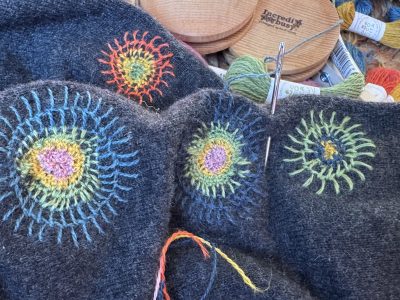
From Moth-Eaten Cashmere to Beautiful Visible Mending: A Firework Repair Story
A dear friend gifted me a dark grey cashmere V-neck jumper that had a small hole in the underarm. At first glance, it looked like a simple seam separation, an easy, almost invisible repair. She didn’t want the jumper back, so it sat in my studio for quite some time before I finally got around to fixing it with a Scotch Darning Firework repair.
When I did, I discovered the problem was far bigger than expected.
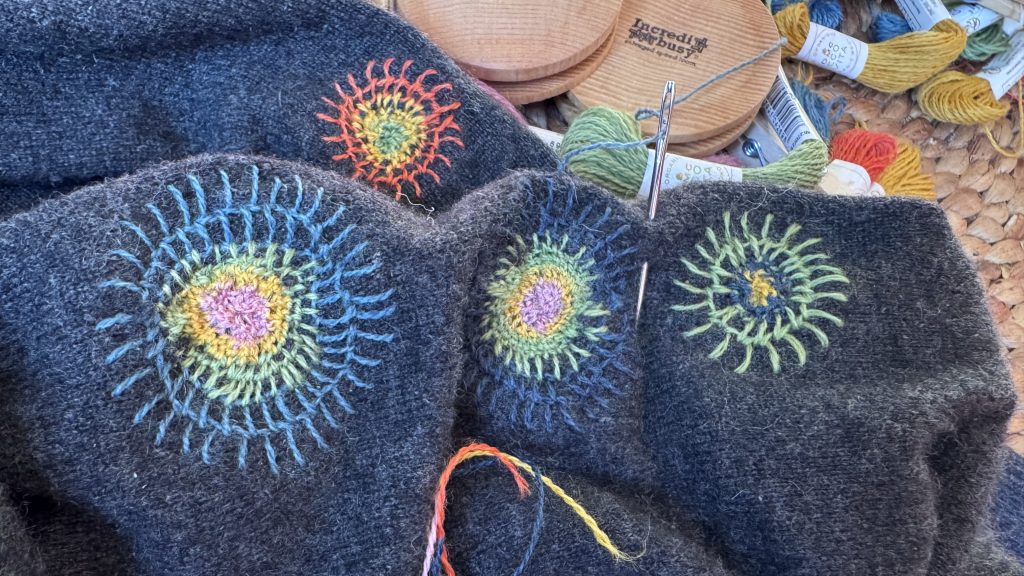
Unfortunately, the jumper had been quietly harbouring moths. They had taken quite a liking to the soft cashmere and munched their way through multiple areas, leaving behind several holes. Before doing anything else, I placed the sweater in the freezer for two days to deal with any moths or eggs, a simple but effective method for protecting natural fibres.
Learning Visible Mending: The Firework Repair Technique
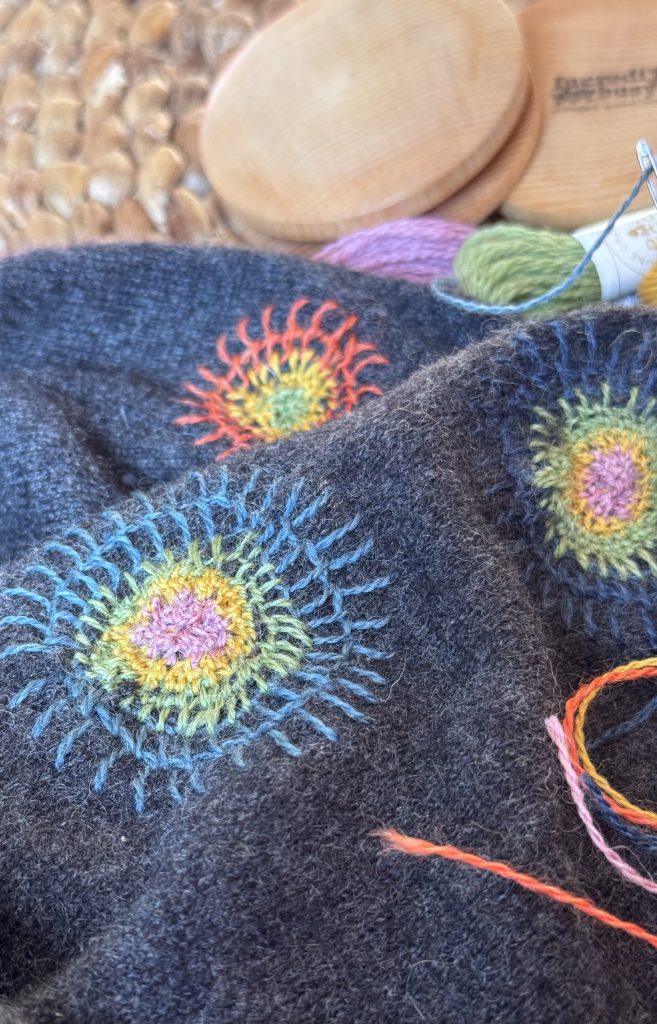
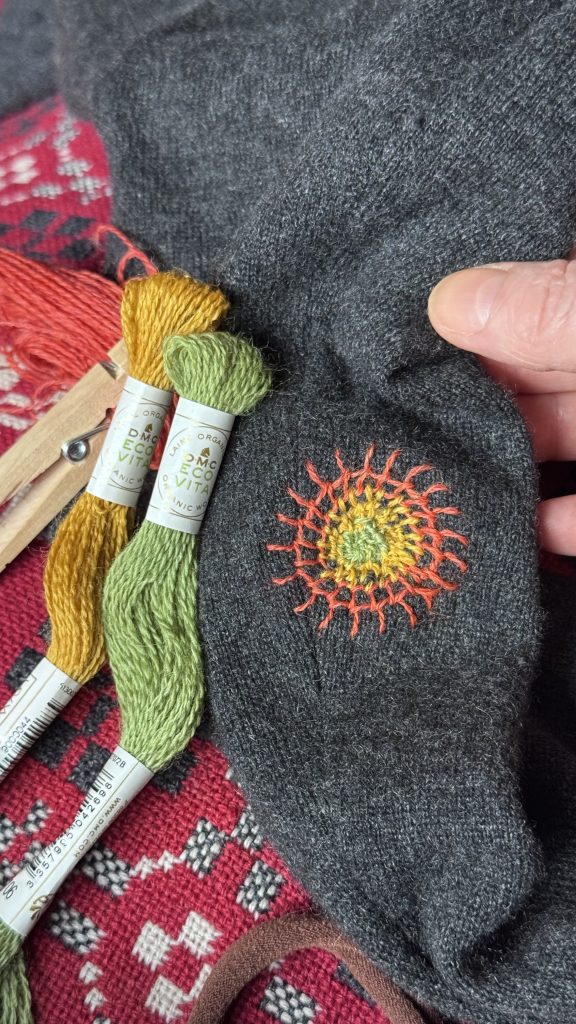
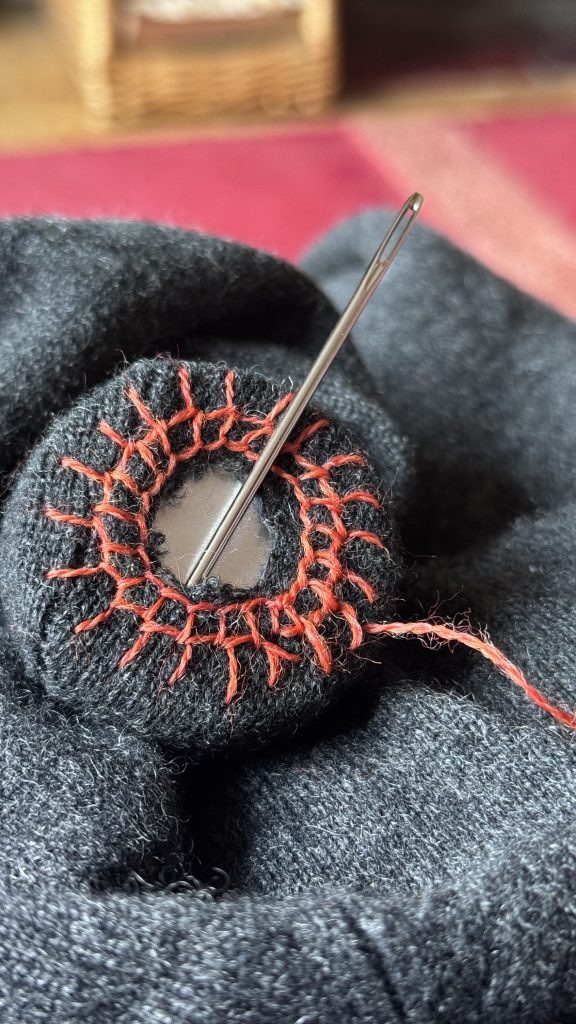
With more than one hole to repair (I’ve stopped counting!), I decided this was the perfect opportunity to embrace visible mending rather than hiding the damage. I began experimenting with a “firework repair” style, some folks call this ‘Honeycomb Repair, Scotch Darning’ with a bit of ‘Blanket Stitch’ thrown in for good measure, using beautifully soft organic yarn to transform each hole into a decorative feature.
Scotch darning is a traditional knitwear repair technique that uses a structured lattice of stitches to reinforce worn areas, and in this project I’ve adapted it into a decorative firework repair style. This approach to Scotch darning firework repair transforms moth holes in cashmere into bold, colourful features while still maintaining the strength and durability of the garment. If you’re interested in sustainable fashion, this Scotch darning firework repair is a creative way to extend the life of your clothes through visible mending.
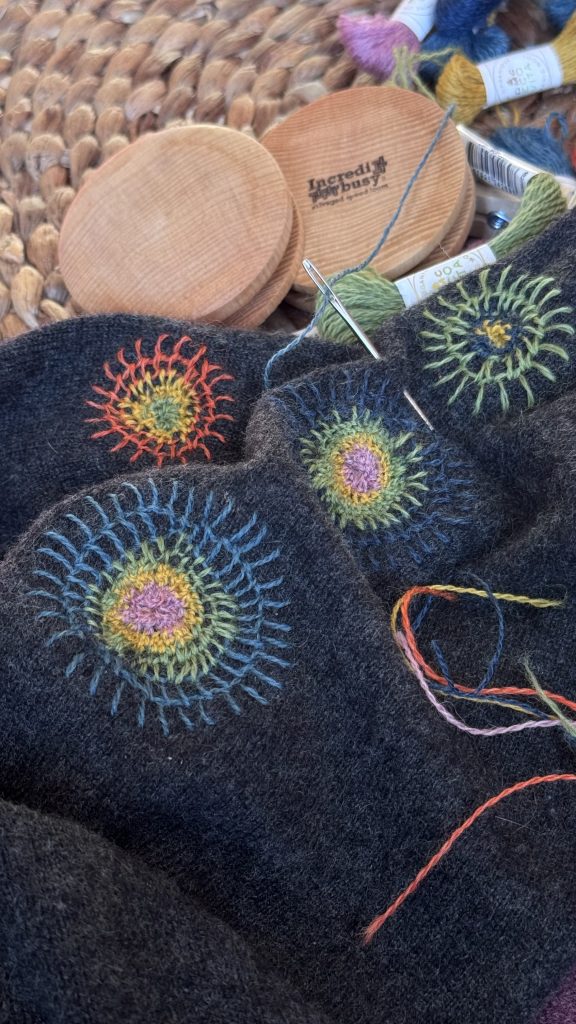
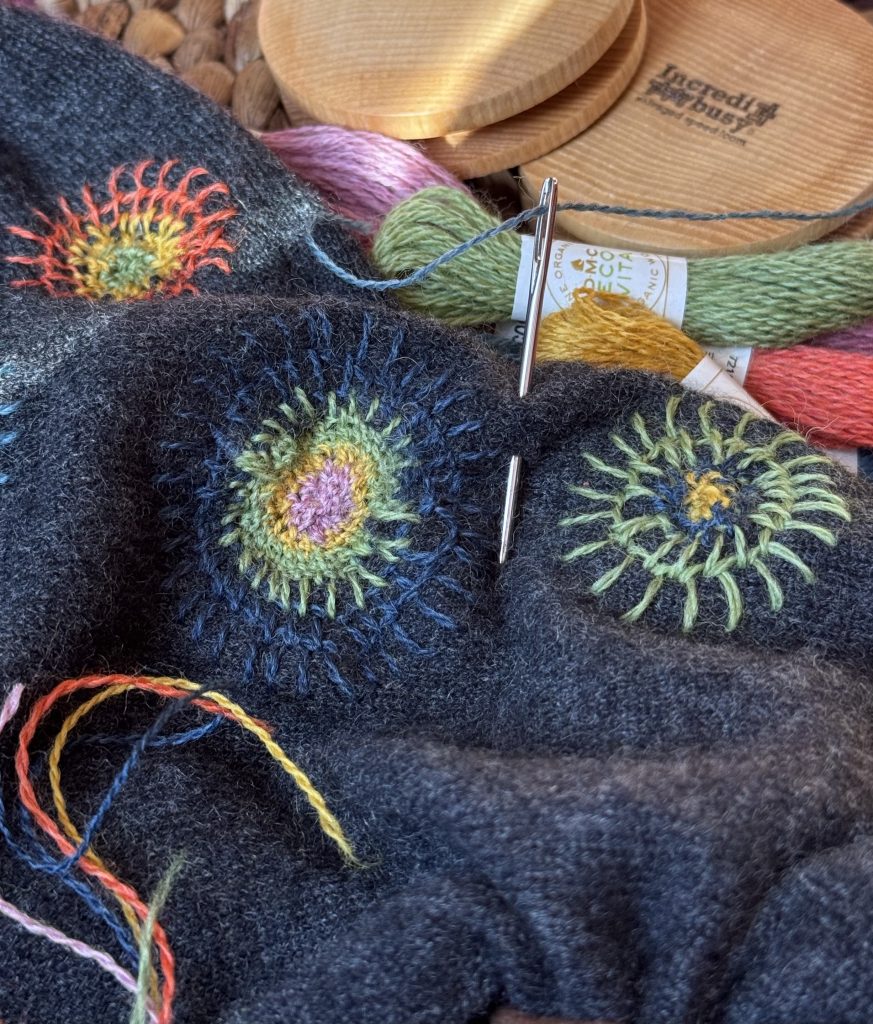
What started as a repair job quickly turned into a creative process. But I loved it, and these gorgeous DMC organic threads really are making it look quite beautiful!
Scotch Darning Firework repair
I’ve been working through the jumper slowly, trying different techniques and refining my approach. Over time, I’ve managed to reduce the repair time to around 25 minutes per hole, which feels like a small victory.
Each mend is slightly different, adding character and individuality to the piece. What was once a damaged garment is becoming something unique, full of texture and story.
Caring for Repaired Cashmere
Now the question is: hand wash only, do you think? With so much delicate hand stitching involved, it certainly feels like the safest option to preserve both the yarn and the repairs.
Join My Visible Mending Workshop in London with Scotch Darning Firework repair
If you’re interested in learning visible mending techniques like this, I’ll be hosting a drop-in workshop at Gudrun Sjödén, London.
Whether you have a moth-eaten jumper of your own or just want to learn new textile skills, you’re very welcome to come along. (don’t forget to treat that moth problem first though – click here for info on that).
🧵 Date: Saturday, 25 April 2026 (the closest Saturday to Earth Day)
🌍 A perfect way to celebrate sustainability, slow fashion, and creative repair.
 How to Create Healthy Internet Habits for the Whole Family?

Hi Ali
I’d love to learn how to do this but don’t live in London . Do you have any on line teaching resources I could access ?
hello Yvette, I have a firework repair workshop here you might enjoy
Let me know if you have any questions 🙂 Ali x