

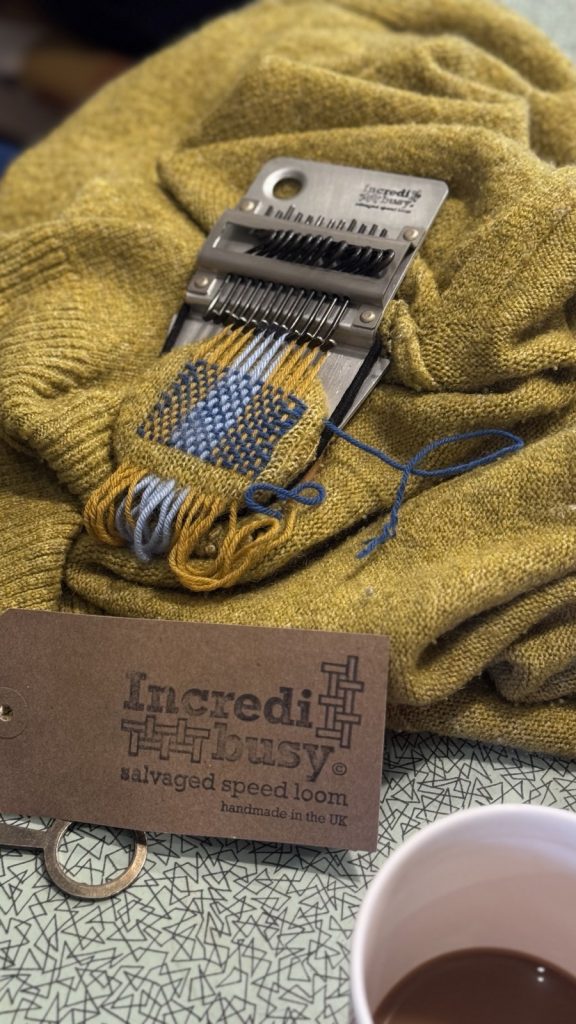
There’s a very particular kind of disappointment that comes with spotting a tiny hole in a favourite jumper. (secretly I’m always quite pleased to see a small hole, as I love repairing knitwear!)
Not dramatic. Not catastrophic. Just… quietly devastating.
More often than not, it isn’t actually moths themselves doing the damage, it’s their larvae, small and hungry, drawn to the natural fibres we tend to love most.
The reassuring part?
There’s a simple, effective, and beautifully low-tech way to deal with it:
Pop your knitwear in the freezer.
Does freezing clothes kill moths?
Yes, freezing is widely used by textile conservators to kill moths at every stage of their lifecycle, including eggs, larvae and adults.
Guidance from organisations like English Heritage recommends freezing delicate textiles at around -18°C to safely eliminate infestations without damaging fibres.
It’s the kind of method that feels almost too simple, but it works.
How to freeze knitwear properly
If you’re going to do it, it’s worth doing it gently and thoroughly:
- Place items in airtight bags to prevent condensation
- Freeze at -18°C (standard for most home freezers)
- Leave for at least 72 hours, ideally up to a week
- Allow to defrost slowly while still sealed
- Then air, or wash as needed
It’s a quiet process. No chemicals, no fuss, just time and temperature doing their work.
Why moths end up in our wardrobes
Clothes moths aren’t about cleanliness, they’re opportunists.
They’re drawn to:
- Wool, cashmere, alpaca and silk
- Traces of natural oils from wear
- Still, undisturbed spaces
They can arrive via second-hand finds, new purchases, or simply through open windows.
Avoid unknowingly moving pests from one place to another.
Which, in everyday terms, just means being a little mindful about what we bring into our homes, and into shared spaces like my visible mending workshops.

A gentle note if you’re coming to a mending workshop
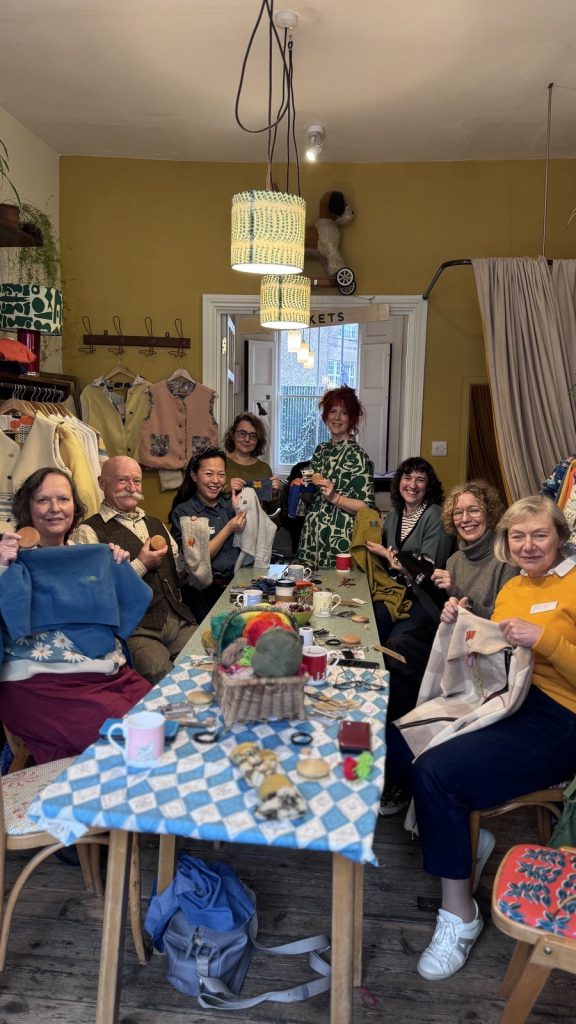
In my visible mending workshops, we gather around a table of much-loved clothes, each piece carrying its own story.
Because we’re working closely together, I always suggest (gently, and without any judgement) that anything brought along is:
- Clean or freshly aired
- Free from signs of active moths
- And, if there’s any uncertainty, given a little freezer moment first
It’s not about perfection. Just a small, thoughtful act of care for everyone in the room, and for all the textiles we’re there to look after.
Beyond freezing: simple ways to protect your knitwear
Freezing is incredibly effective, but it works best alongside a few small habits:
- Wash or air clothes before storing
- Vacuum wardrobes and drawers regularly
- Store knits in sealed containers where possible
- Use natural deterrents like lavender or cedar (helpful, but not a complete solution)
Advice from English Heritage also emphasises regular monitoring, catching things early makes all the difference.
The tools that help us keep things going
For many people I meet through workshops, mending starts as a small act, a way to save a sweater, and becomes something much bigger.
Having the right tools helps.
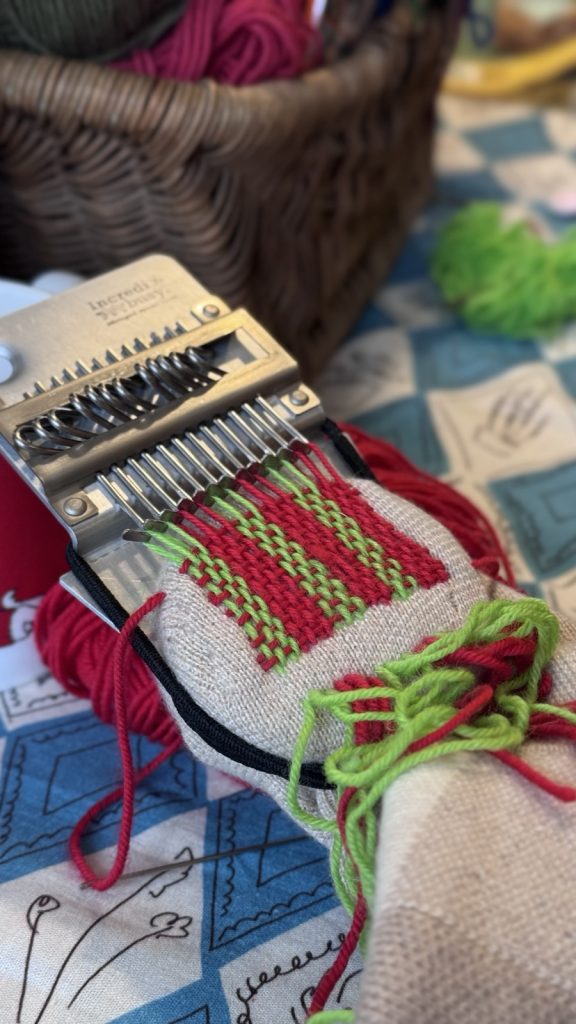
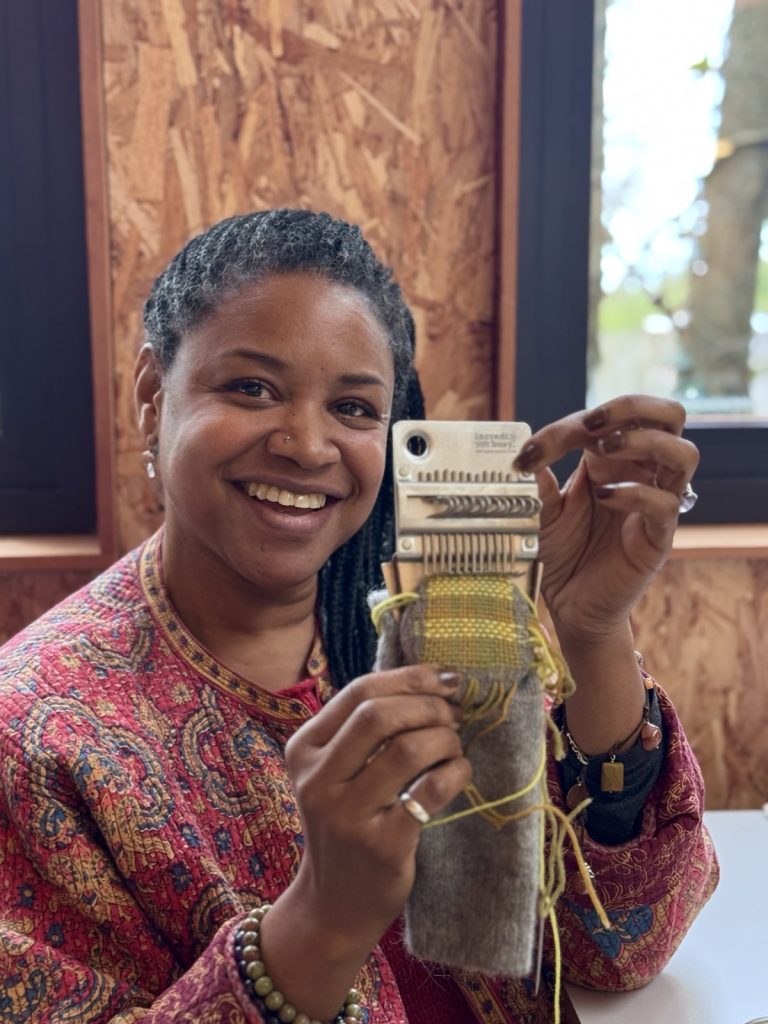
My own darning looms are made from recycled materials, designed to be simple, satisfying to use, and easy to return to again and again at home. They’re the same ones I use when teaching, and they’ve become a bit of a companion piece to the practice of visible mending.
As one recent participant shared:
“Such a brilliant, calming class — I came away not only with new skills but completely inspired to mend everything I own. The loom is beautiful and so easy to use, I haven’t stopped since.”
And that’s really the point, not perfection, but continuation.
A slower way of caring for clothes
Freezing your knitwear might feel unusual at first.
But it sits within a wider rhythm, one that values care over replacement, attention over urgency.
It’s the same thinking behind visible mending:
to notice, to repair, to extend the life of what we already have.
And sometimes, that care looks like a wool jumper, neatly folded between frozen peas, being quietly looked after.
 Using Tech to Strengthen your Finances as a Small Business

Leave a Reply